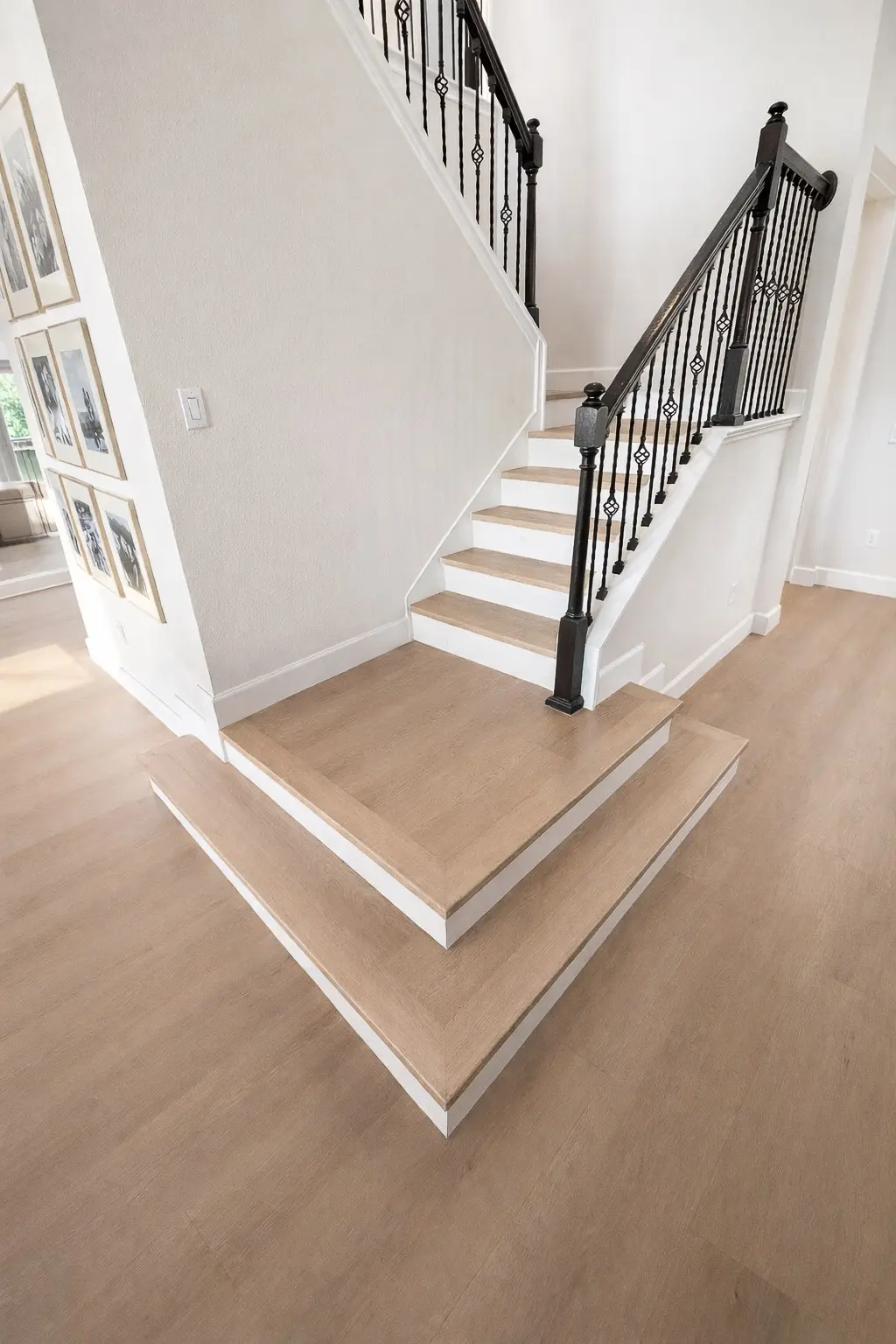
Carpeted stairs come up in a lot of our estimates. The downstairs is getting luxury vinyl plank or hardwood, and the staircase in the middle of it all is still covered in worn carpet. Turning those stairs into wood treads is one of the most visible changes you can make to a house, and it is one of our favorite kinds of project.
Here is what a carpet-to-wood stair makeover involves, the parts that make up a finished staircase, and how to match the stairs to your new floor.
What does a carpet-to-wood stair makeover involve?
It starts with removal. The carpet, pad, tack strip and every staple come out. Underneath, carpeted stairs usually have plain construction-grade treads and risers that were never meant to be seen.
On many staircases the old tread has a rounded front edge, called a bullnose, that sticks out past the riser. That overhang usually has to be cut back so the new tread sits flat and its nosing projects the right amount. Then each step is measured on its own, because very few staircases are perfectly square.
New treads are cut to fit their own opening, then glued and fastened so they do not creak. New risers go in and are painted or factory-finished, depending on the look you chose. Finally the trim, any baluster work and the transitions at the top and bottom are finished so the stairs tie into the floors around them.
What are treads, risers and nosing?
These are the terms you will hear at the estimate:
- Tread: the flat part you step on.
- Riser: the vertical face between one tread and the next.
- Nosing: the front edge of the tread that overhangs the riser. On a solid wood tread it is part of the board; on an LVP or laminate stair it is a separate matching piece.
- Balusters: the vertical spindles that hold up the handrail.
- Skirt board: the trim along the side of the staircase where it meets the wall.
Knowing the parts helps when you are choosing a look, because each one can be a different material or color.
Should I choose hardwood treads or LVP treads?
Both work, and the right one usually depends on the floor around the stairs.
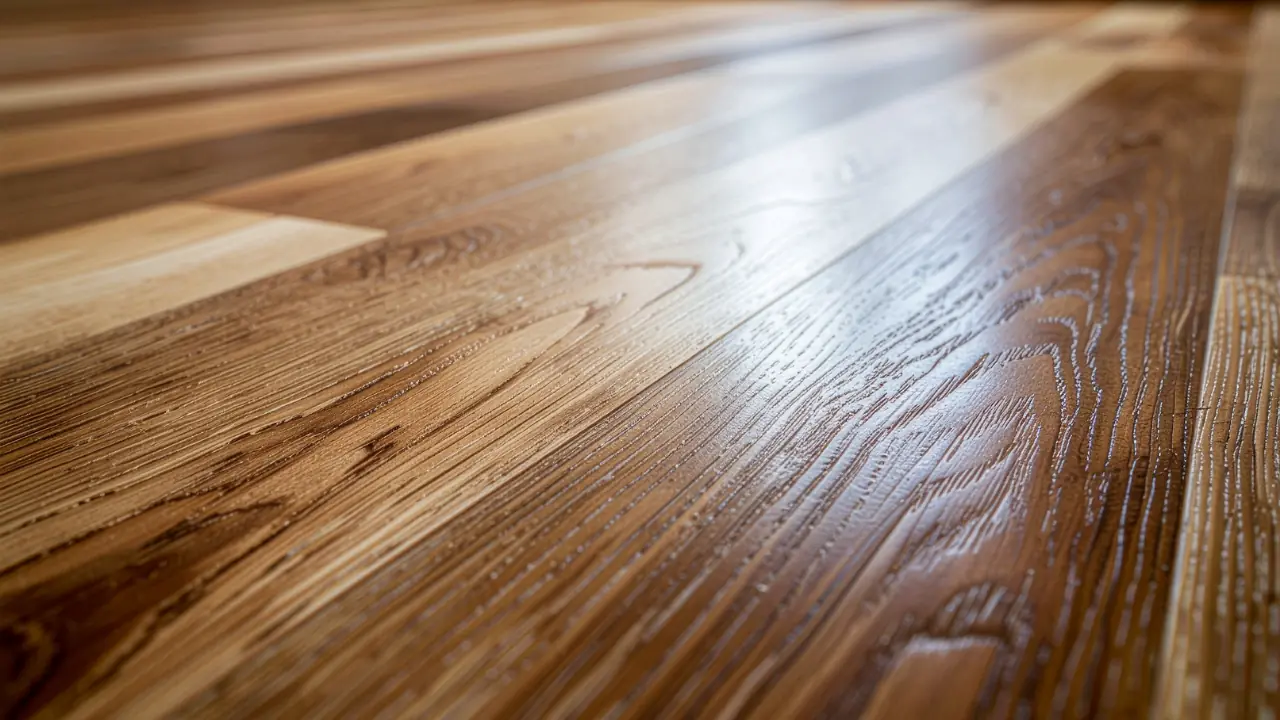
Solid oak treads are the classic choice. They are strong, they take a stain well, and they suit both traditional and modern houses. Oak treads with painted white risers have stayed popular for good reason.
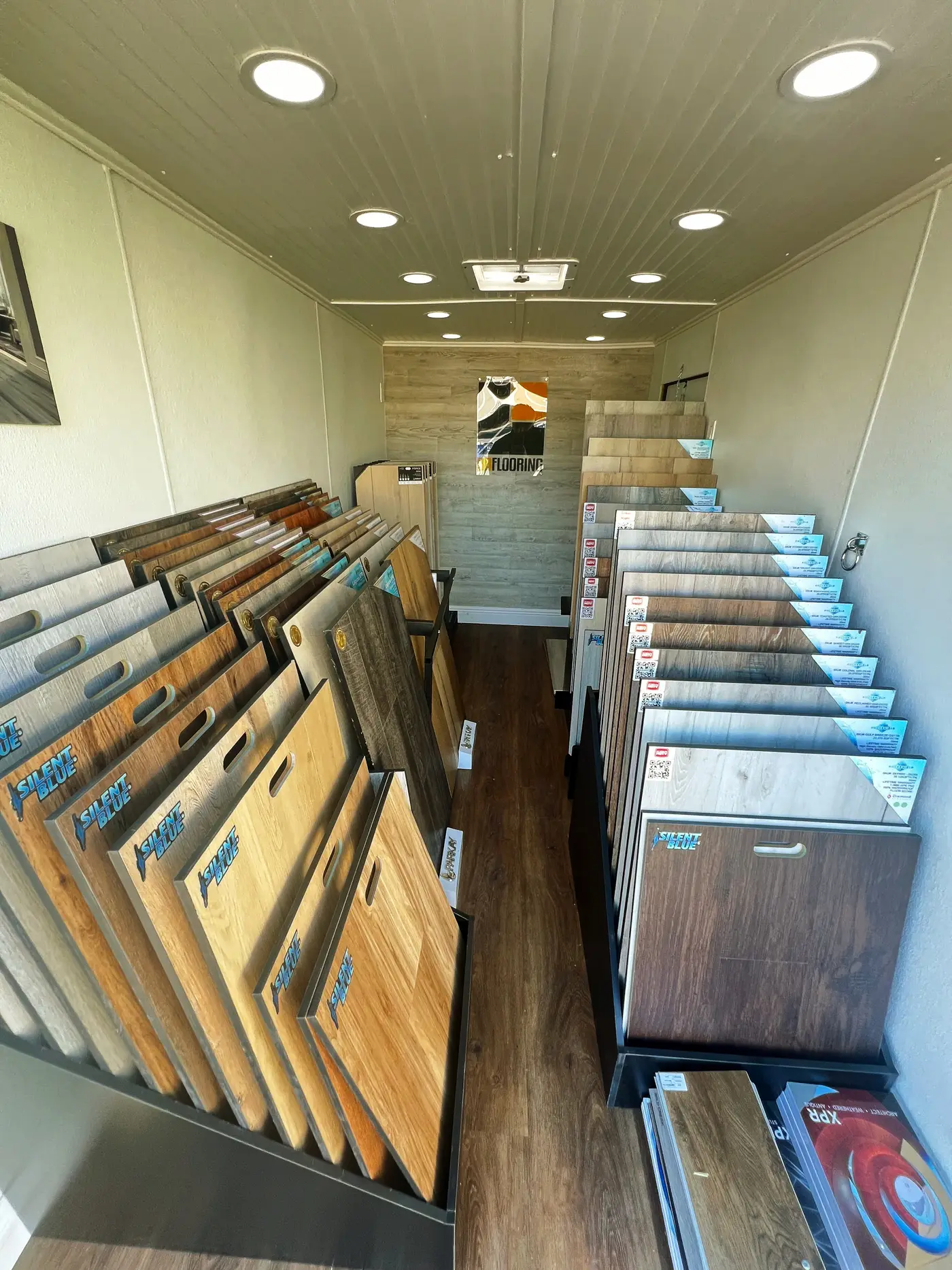
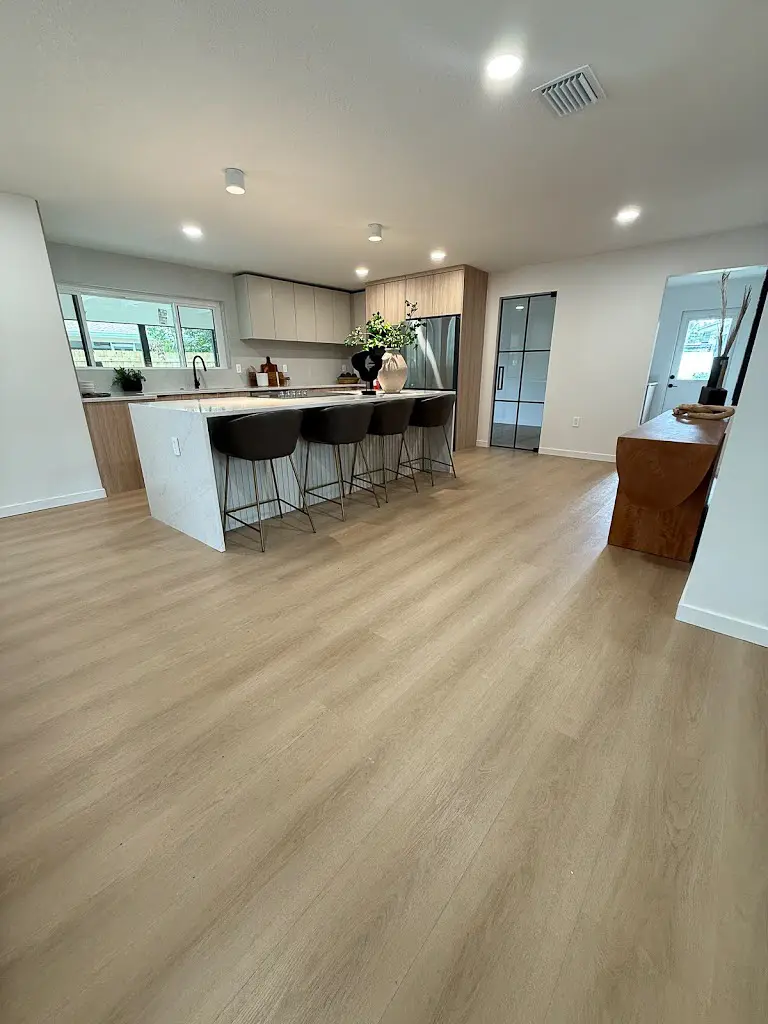
If the floor at the bottom of the stairs is luxury vinyl plank or laminate, you can carry the same product up the steps with a matching stair nosing on each tread. That gives you one continuous look from the living room to the landing. Some LVP lines also offer matching treads. We show you the options for the floor you have chosen at the estimate.
Our hardwood installation page covers solid and engineered wood in more detail.
Should the stairs match the new floor?
That is the goal, but matching does not have to mean identical. Two approaches work well:
- Match: treads and nosing in the same product or color as the floor, so the staircase reads as part of the floor.
- Complement: treads in a deliberately different tone, such as dark stained oak against a light floor, with white risers to separate them.
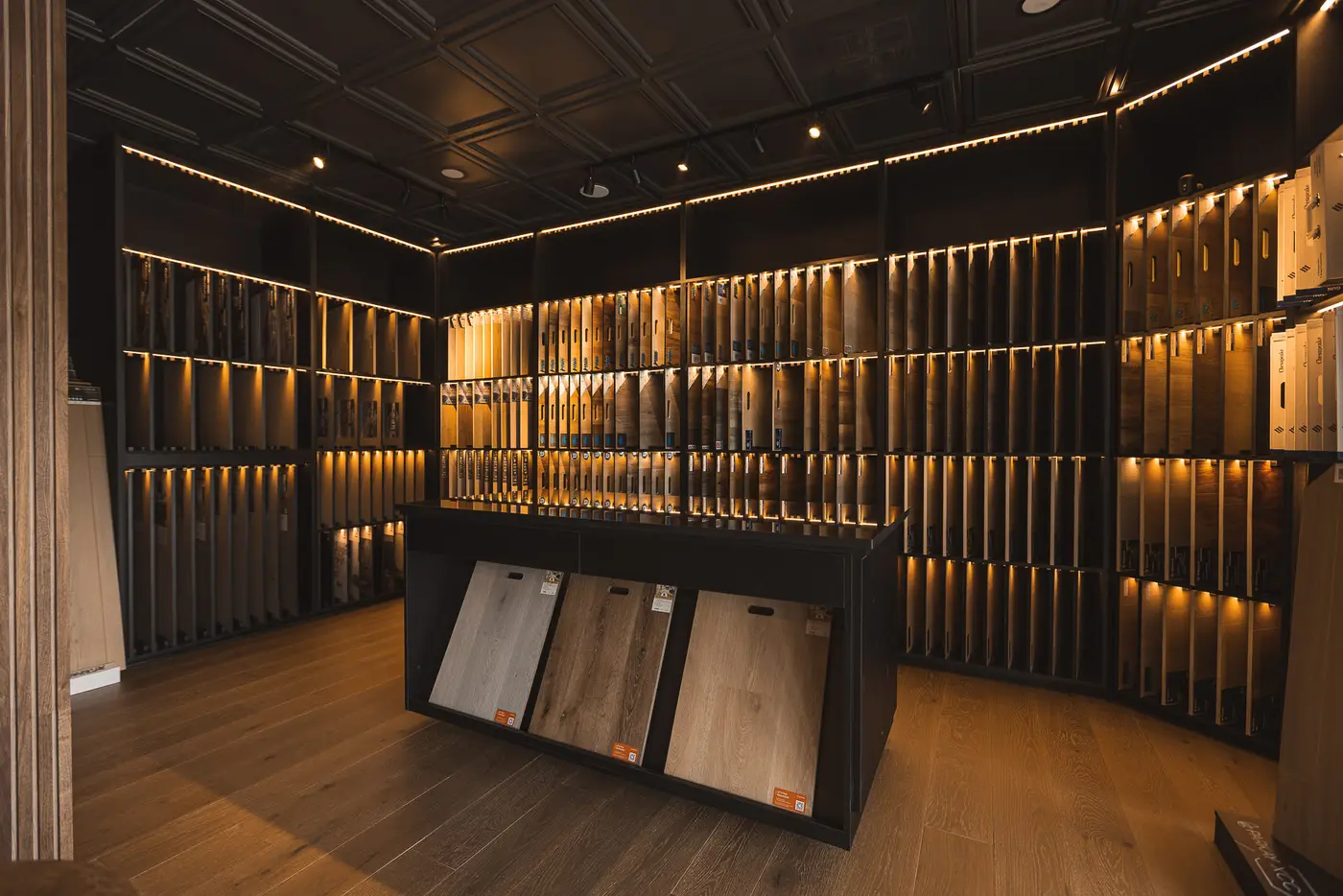
What does not work is a near miss: a tread that is almost the same color as the floor but not quite. Side by side, small differences in tone or sheen stand out. This is why we plan stairs and floors together, with the samples next to each other, rather than treating the staircase as a separate job.
Stairs also take more wear than any other part of the floor, and they sit right in the line of sight from the front door. A new floor that runs up to an old carpeted staircase can make the whole job look half done.
Finishing touches: balusters and trim
Treads and risers are the main event, but the details around them decide whether the staircase looks finished.
Are iron balusters worth adding?
For a lot of homes, yes. Swapping old wooden spindles for iron balusters is one of the most visible upgrades you can make to a staircase. Paired with new treads and painted risers, it can make a builder-grade staircase look custom.
The old spindles are removed, and the new iron balusters are set and secured into the treads and the handrail, then lined up so the spacing is even from top to bottom. Doing this at the same time as the treads makes sense, because the balusters sit in the treads you are replacing anyway. We bring examples of the styles available to the estimate.
What trim does a staircase need?
Trim is where a stair job looks finished or does not. The skirt board along the wall, the transition at the bottom step, the nosing where the stair meets the upstairs floor and the baseboard on the walls around it all need to line up with the new floor.
Removing old carpet and flooring often damages existing baseboard, and floating floors need an expansion gap at the walls that baseboard or quarter round covers. We include that trim in our quotes so it is not an afterthought. There is more on this on our stairs and trim page.
Planning your staircase makeover
How long does a stair makeover take?
It depends on the number of steps, whether the stairs are open on one side, whether there are landings or turns, and whether balusters are being replaced. A straight staircase is simpler than a curved one or one with a landing halfway up. We give you a realistic schedule at the estimate. When the stairs are part of a bigger flooring job, we plan the order of work around how you use the house.
What to decide before the estimate
A few things to think about ahead of time:
- Which floor is going in at the bottom and at the top of the stairs.
- Whether you want the stairs to match the floor or contrast with it.
- Riser color, usually white or to match your trim.
- Whether you want to keep the existing balusters or switch to iron.
If you want ideas, our project gallery has a number of staircases we have done, from light oak to dark treads with white risers.
A staircase is often part of a larger project, and 0% financing for up to 24 months is available to qualified buyers (OAC).
If your stairs are still carpeted, book a free in-home estimate. We will bring tread, nosing and floor samples to your home, measure the staircase, and quote the stairs together with the floor so one crew handles the whole job.