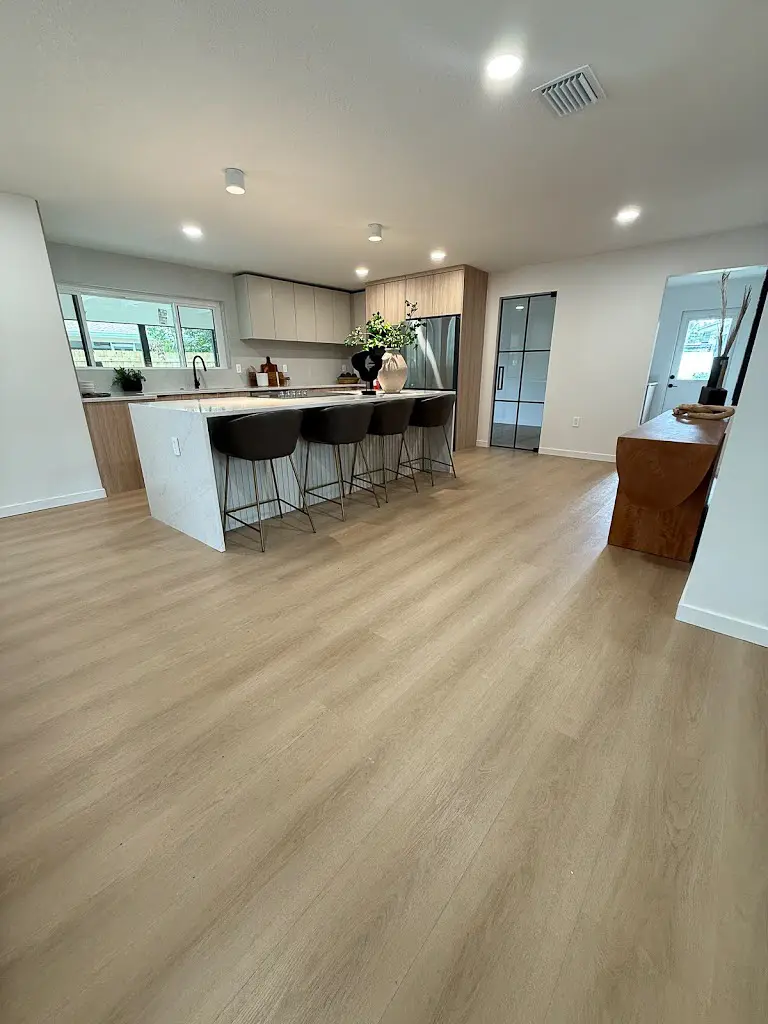
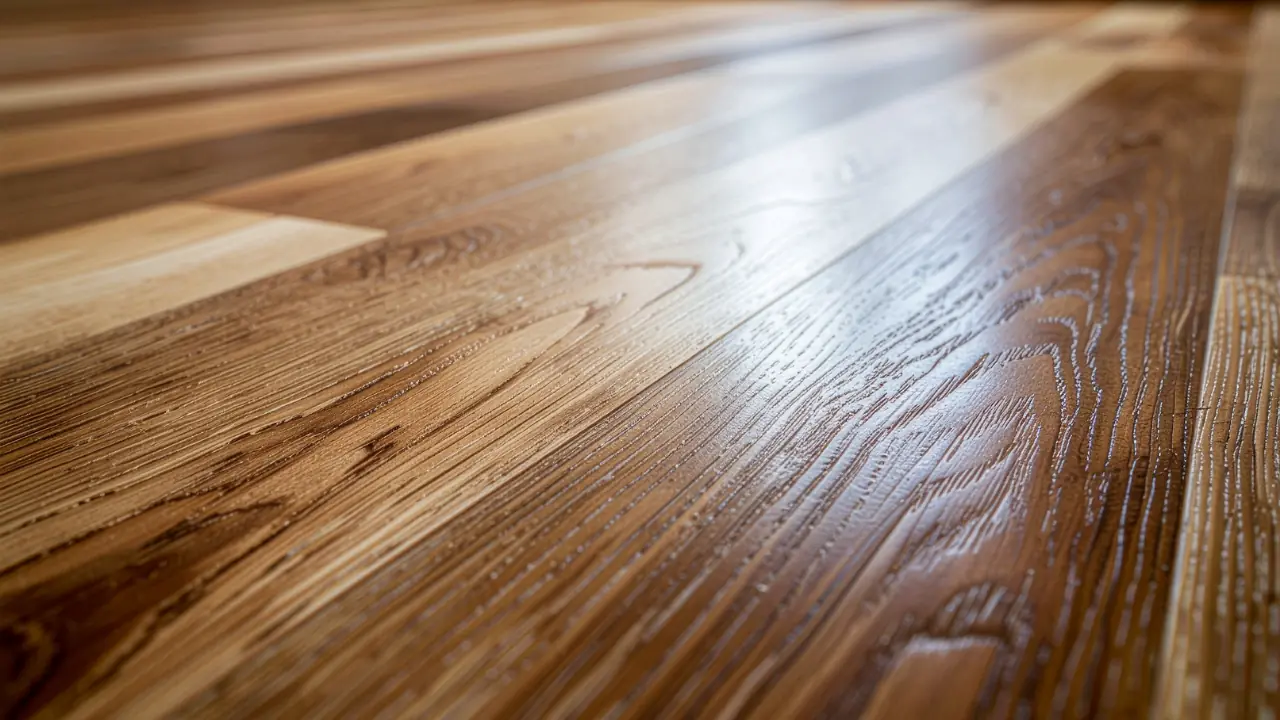
Hardwood is the floor many people picture when they think about a new floor. In Tampa Bay, the first question is not which species or which color. It is what the wood will sit on. Most houses here are built on a concrete slab, and the air is humid for much of the year. That combination is why engineered hardwood is usually our recommendation for ground-floor rooms, and why solid hardwood still has its place.
One note before we start: we install new hardwood floors only. We do not sand, stain or recoat existing wood.
What is the difference between engineered and solid hardwood?
Solid hardwood is one piece of wood from top to bottom. It is the traditional floor, and it is traditionally nailed down to a wood subfloor.
Engineered hardwood has a real hardwood top layer bonded to a core of cross-layered wood. From the top, you see and feel real wood. Underneath, the layers run in different directions, which keeps the board from moving as much when humidity changes.
Neither is a cheap imitation of the other. Engineered hardwood is real wood where you see it. The real question is which one suits your subfloor and your climate.
Why does engineered hardwood usually win on a Florida slab?
There are three reasons.
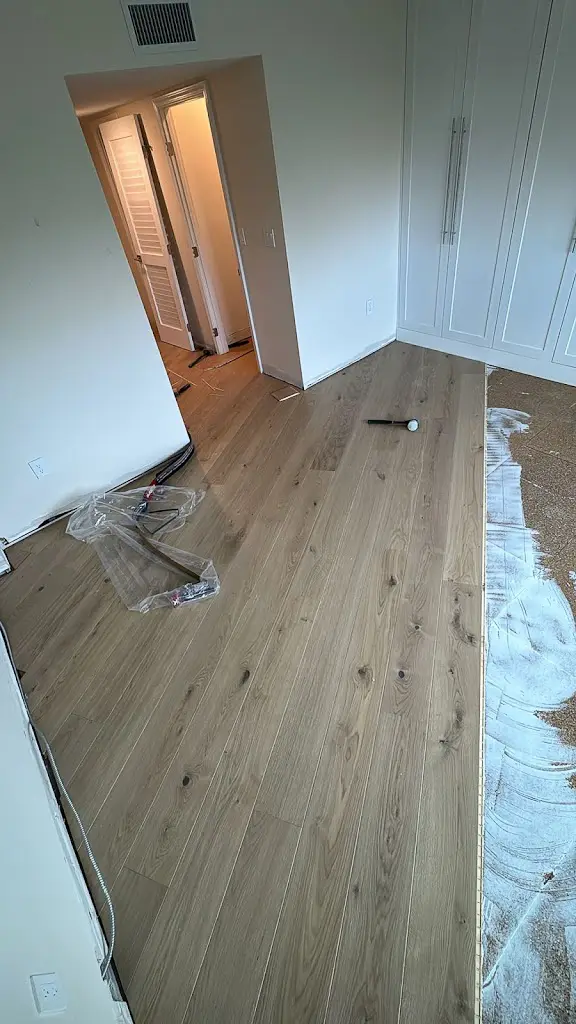
The first is how it gets installed. Solid hardwood is designed to be nailed into a wood subfloor, and you cannot nail into concrete. Getting solid wood onto a slab means building a wood subfloor on top of it, which adds height, time and more things that can go wrong. Engineered hardwood can be glued directly to a properly prepared slab, or floated over it with the right underlayment and moisture barrier.
The second is moisture from below. Concrete can carry moisture up from the ground. When the bottom of a board is wetter than the top, the board cups, with the edges rising higher than the center. Engineered boards still react to moisture, but their layered core resists it much better.
The third is humidity in the air. Tampa Bay summers are long and damp. Solid boards expand and shrink more with those swings, which can show up as gaps in drier months and tight, cupped boards in wetter ones. An engineered floor stays far more stable through the year.
Where does solid hardwood fit, and where should you skip wood?
When solid hardwood makes sense
Solid hardwood is a real option over a wood subfloor. In Tampa Bay that usually means:
- Upstairs rooms in a two-story home with a wood-framed second floor.
- Older homes built on a raised wood floor system rather than a slab.
- Stair treads, where solid oak is the classic choice.
Some homeowners specifically want solid wood, and over the right subfloor we install it. At the estimate we look at what is under your current floor and tell you which we recommend and why.
Rooms where we suggest skipping hardwood
Full bathrooms, laundry rooms and the floor by a pool door are rooms where we usually suggest a wood-look luxury vinyl plank or tile instead. Hardwood can survive there, but you will spend years worrying about it.
Kitchens are a judgment call. Many people love wood in the kitchen, and it works if spills get wiped up quickly and there is a mat at the sink. If your kitchen sees heavy water use or a busy household, we bring waterproof plank samples alongside the wood so you can compare. Our post on LVP vs laminate for Florida slab homes covers those options.
Why test the slab for moisture before hardwood goes down?
Any wood floor on a slab depends on the slab being dry enough. A slab that took water in a storm or a leak, or one in a low-lying area, can hold more moisture than the floor can tolerate, even when the surface looks dry.
Before a hardwood install we test the moisture in the slab or subfloor and in the wood itself. Each manufacturer sets its own limits and its own acclimation instructions, and we follow them with your air conditioning running at normal settings. We go by the readings, not by a fixed number of days.
If the slab reads too wet, we stop and talk about it before the wood goes down. Sometimes the answer is more drying time. Sometimes it is a different moisture barrier, and sometimes it is choosing a different floor for that room. Our guide to slab prep before new flooring walks through the whole process, from tear-out to leveling.
Glue-down or floating engineered hardwood?
Engineered hardwood on a slab is usually installed one of two ways.
Glue-down
The boards are bonded directly to the slab with an adhesive made for concrete, often one that also acts as a moisture barrier. A glued floor feels solid and quiet underfoot, close to a traditional nailed floor. It needs a flat, clean, sound slab, so any old thinset or adhesive has to come off first.
Floating
Some engineered products click together and float over an underlayment with a moisture barrier, like a laminate or LVP floor. Floating can be quicker and works well where the slab conditions suit it, but not every engineered product is designed to float. The manufacturer's instructions decide which methods are allowed, and we follow them.
How to choose your engineered hardwood
Once you know engineered is right for the room, the choices are about look and wear:
- Species and color, which can look quite different in your own light than in a store.
- Plank width and length. Wide planks suit open living areas.
- Finish sheen. Matte and low-sheen finishes hide everyday scuffs and dust better than gloss.
- Construction and top layer thickness, which vary from product to product and affect how the floor wears.
Our hardwood installation page has more on the products and how we install them. If you live in the city, see our page on hardwood flooring in Tampa.
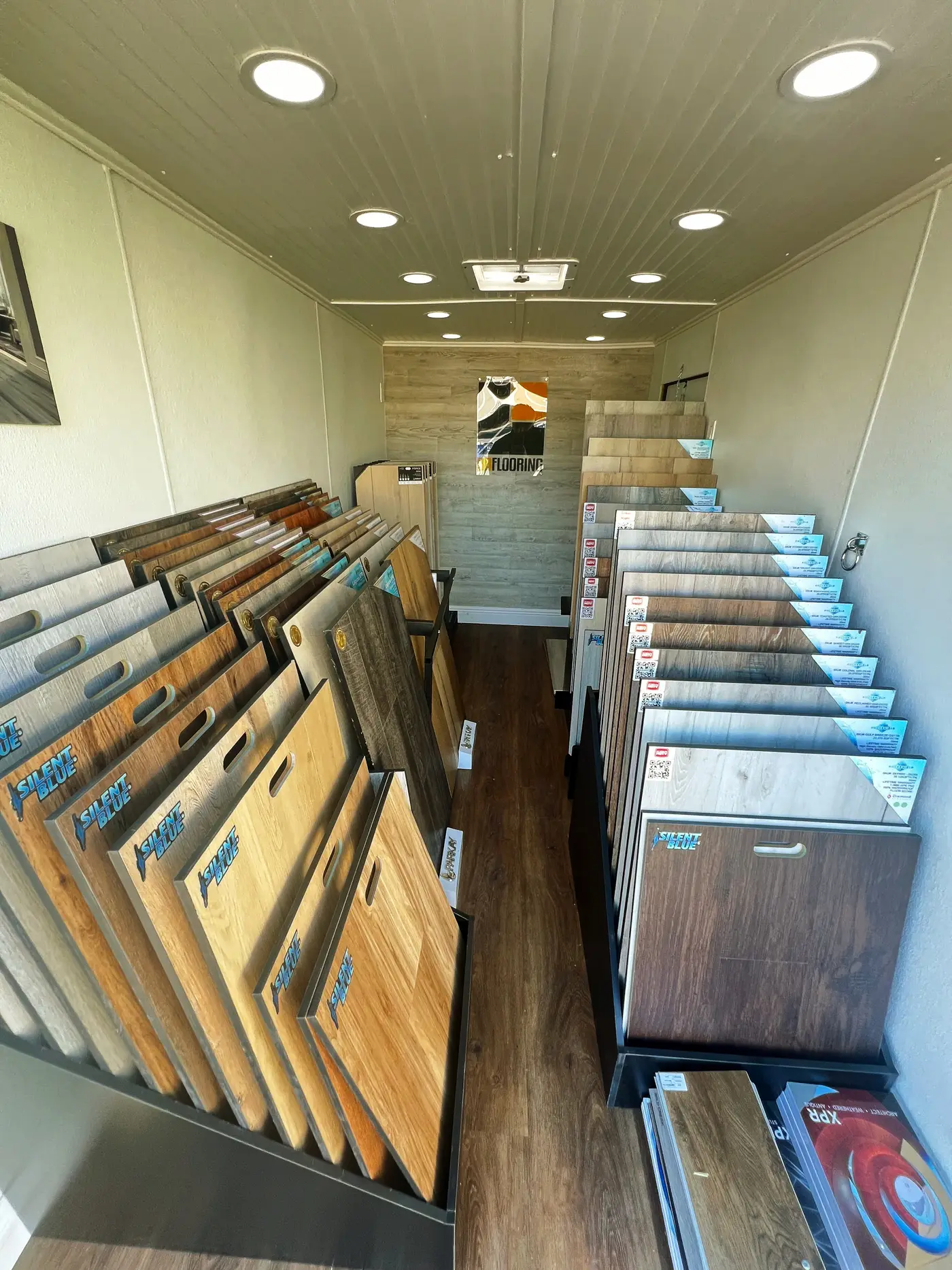
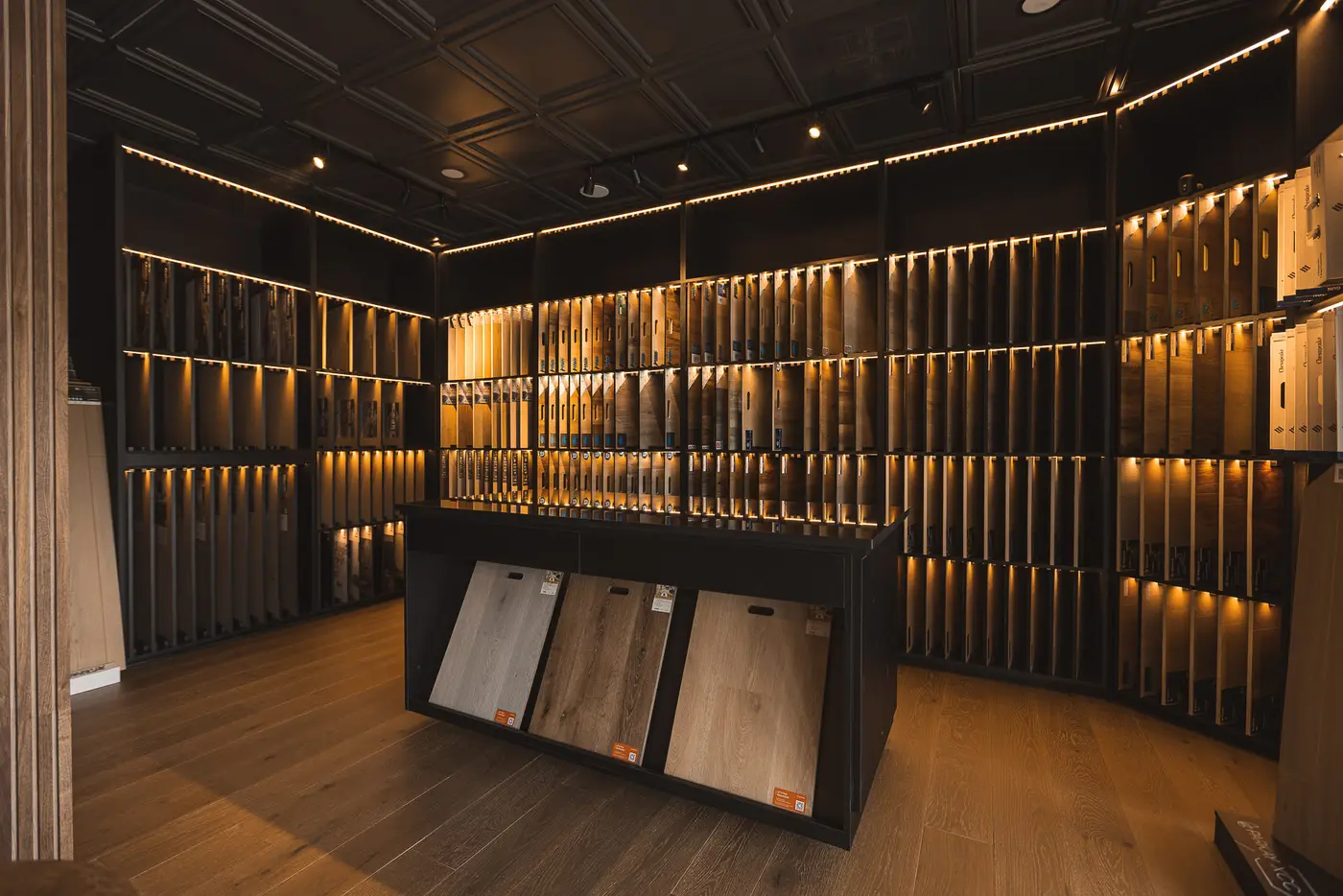
If you are planning hardwood for a slab home in Hillsborough, Pinellas or Pasco County, book a free in-home estimate. We will bring engineered and solid samples, check the slab and its moisture, and tell you plainly which one we would put in your house.